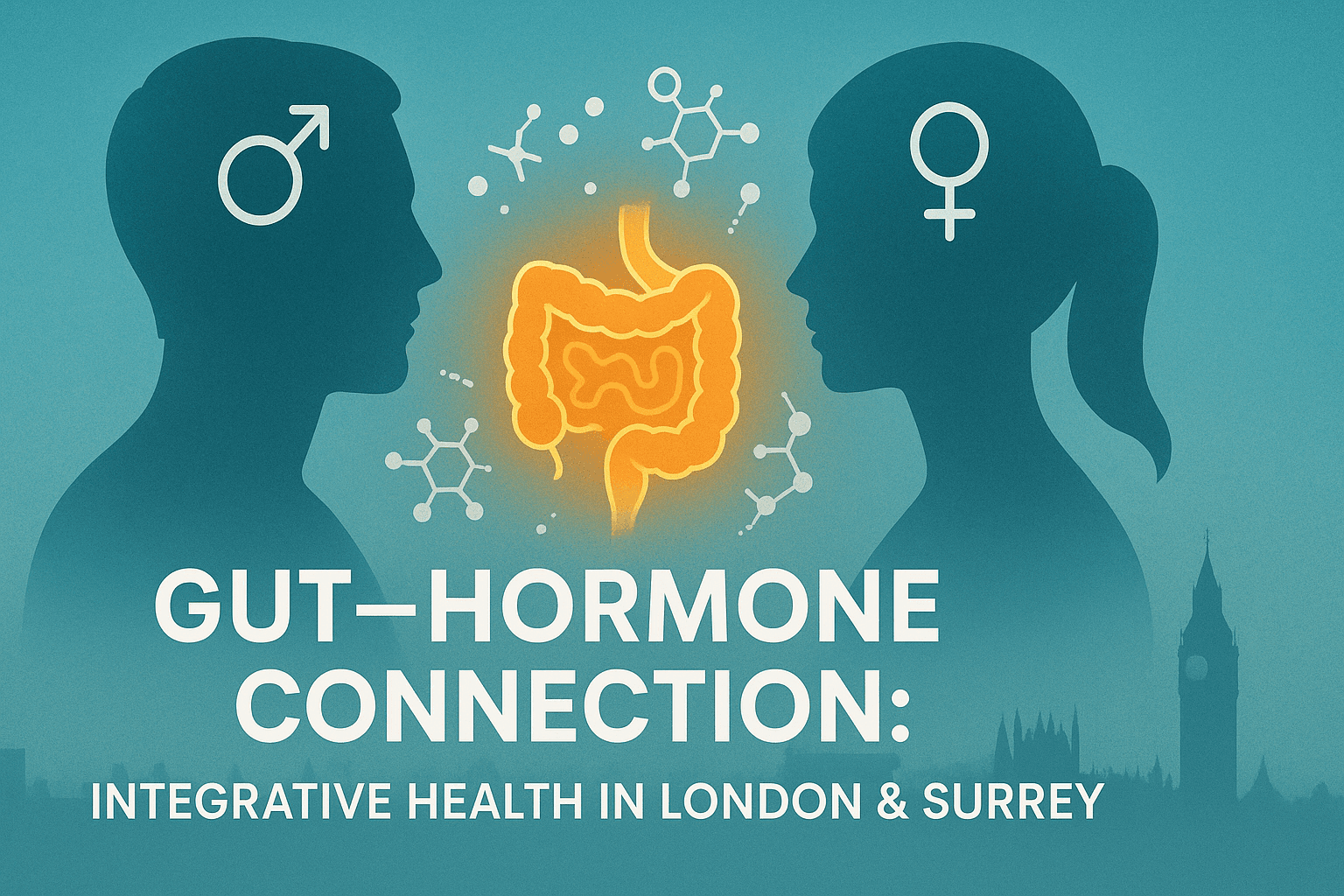
Testosterone Restoration, the Gut Microbiome, and Systems Outcomes in Men and Women
R&D

Testosterone Restoration, the Gut Microbiome, and Systems Outcomes in Men and Women
Levitas Academy
14 January 2026
2 min read

Testosterone Restoration, the Gut Microbiome, and Systems Outcomes in Men and Women

Testosterone restoration therapy (TRT) is increasingly used in men and, when clinically indicated, in women. Emerging evidence shows bidirectional crosstalk between sex steroids and the gut microbiome, with implications for metabolic, neuropsychiatric, and inflammatory outcomes. This brief synthesises current data to guide clinicians on integrating gut assessment and modulation with TRT.

  • sex hormones shape microbial composition and function, and microbes metabolise/steward steroid bioavailability;
  • low testosterone states associate with dysbiosis and inflammatory taxa;
  • sex-dimorphic microbiome–disease patterns extend to the gut–brain axis; and
  • microbiota-directed adjuncts (e.g., probiotics/synbiotics) show early signals of benefit in hyperandrogenic states such as PCOS.

1) Physiological Background

Sex steroids (testosterone, estradiol, progesterone) modulate immune tone, musculoskeletal anabolism, neurocognition, and cardio-metabolic risk across the lifespan…

2) Sexual Dimorphism & Disease Patterns

Across preclinical and human data, sex differences in obesity and metabolic disease are partly explained…

Gut–brain axis:

Large cohort data show that associations between specific gut taxa and psychological symptom severity…

3) Low Testosterone & Dysbiosis

Observational clinical data in men with type 2 diabetes demonstrate that low serum testosterone associates with reduced microbial diversity…

4) Women’s Health: Hyperandrogenism & Microbiota

In PCOS, multiple systematic reviews/meta-analyses indicate probiotics/synbiotics can improve glycaemic indices…

5) Clinical Implications for TRT at Levitas

  • Persistent fatigue, brain fog, visceral adiposity or glycaemic instability despite dose-appropriate TRT
  • GI symptoms, recurrent antibiotics, PPI use
  • Raised CRP, ferritin, ALT, or metabolic syndrome

Integrated pathway (Levitas Gut Health × Hormone for Life):

Baseline profiling, foundations, TRT initiation, gut-directed adjuncts, re-evaluation.

ParameterBaseline8–12 Weeks24 WeeksTarget
Testosterone20–30 nmol/L
LH & FSHMid-range
E2<150 pmol/L
MicrobiomeOptionalDiversity Maintained

6) Safety & Governance

  • Follow established TRT safety monitoring
  • Screen secondary causes of hypogonadism
  • Microbiome therapeutics are adjuncts

7) Research Priorities (Levitas Academy)

  • Prospective microbiome signatures in TRT
  • TRT ± synbiotic RCT in metabolic syndrome
  • PCOS microbiome-informed phenotypes
  • Neurobehavioral biomarkers under TRT

For clinicians across Levitas Clinics: Pair TRT with gut assessment, use microbiome adjuncts where dysbiosis is present, and track whole-body outcomes.

Explore Our Courses

Explore Our Courses

CPD-accredited courses in longevity, regenerative and functional medicine.

Browse Courses

More Articles

Related Posts

Vitamin D and Cognition
Wellbeing
18 August 20261 min read

Vitamin D and Cognition

Read Article
Vitamin D and the Safety of Higher Doses
R&D
18 August 20261 min read

Vitamin D and the Safety of Higher Doses

Read Article
Methylene Blue and Red Light Therapy for Neuroprotection and Wellbeing
R&D
14 January 20262 min read

Methylene Blue and Red Light Therapy for Neuroprotection and Wellbeing

Methylene Blue and Red Light Therapy for Neuroprotection and Wellbeing Summary: Methylene Blue and Red Light Therapy for Neuroprotection and Wellbeing Overview Methylene blue (MB) and red light therapy enhance mitochondrial function and provide neuroprotection. Together, they synergistically improve cognitive and overall health. Mechanism of Action Methylene Blue Electron Donor: MB donates electrons in the mitochondrial electron transport chain (ETC), enhancing oxygen delivery and ATP production. Inhibition of Nitric Oxide Synthase: Reduces nitric oxide production, stabilizing blood pressure and improving blood flow. Red Light Therapy Photon Donor: Near-infrared light penetrates tissues, stimulating cytochrome c oxidase (Complex IV), enhancing ATP synthesis and cellular respiration. Benefits Energy Levels: Improved mitochondrial function increases ATP production, enhancing physical stamina and reducing fatigue. Cognitive Function: Supports brain health, improving memory, focus, and mental clarity. Mood Regulation: MB acts as a mild MAOI, balancing neurotransmitters and alleviating depression and anxiety. Pain Management: Anti-inflammatory and analgesic effects support conditions like arthritis and migraines. Infection Control: MB’s antimicrobial properties help prevent infections and support immune resilience. Dosage and Administration Methylene Blue: 1–2 mg/kg body weight. Monitoring required above 7 mg/kg. IV dose ~50 mg weekly. Oral dose ~80 mg and titrated upward. Red Light Therapy: Applied transcranially in the 660–1064 nm red–NIR spectrum for optimal penetration. Research and Evidence Protection against Neurodegeneration Gonzalez-Lima and Auchter (2015) showed MB + NIR light enhances mitochondrial respiration and protects neurons. From Mitochondrial Function to Neuroprotection Tucker et al. (2018) demonstrated MB supports mitochondrial repair and may assist in Alzheimer’s and Parkinson’s treatment. Infrared Phototherapy Henderson and Morries (2015) found that NIR light improves cell survival, memory, and glucose metabolism. Neurological & Psychological Applications Rojas & Gonzalez-Lima (2013) showed transcranial lasers enhance blood flow and ATP production in neurons. References Gonzalez-Lima & Auchter, 2015 – Frontiers in Cellular Neuroscience Tucker et al., 2018 – Molecular Neurobiology Henderson & Morries, 2015 – Neuropsychiatric Disease and Treatment Rojas & Gonzalez-Lima, 2013 – Biochemical Pharmacology Wadsworth & Korthuis, 2012 – American Journal of Physiology Hamblin, 2017 – AIMS Biophysics Sahl et al., 2016 – Investigative Ophthalmology & Visual Science Bennett et al., 2016 – Cochrane Reviews Greco et al., 2001 – Journal of Bioenergetics Cassano et al., 2015 – Psychiatry Journal

Read Article

Keep Learning

Explore CPD-Accredited Courses

Browse the Levitas Academy course catalogue or get in touch with our team to find the right learning pathway.